 Innok Robotics
Annual General Meeting Approves Contribution: Innok Robotics on Course for the Public Capital Market
Annual General Meeting Approves Contribution: Innok Robotics on Course for the Public Capital Market
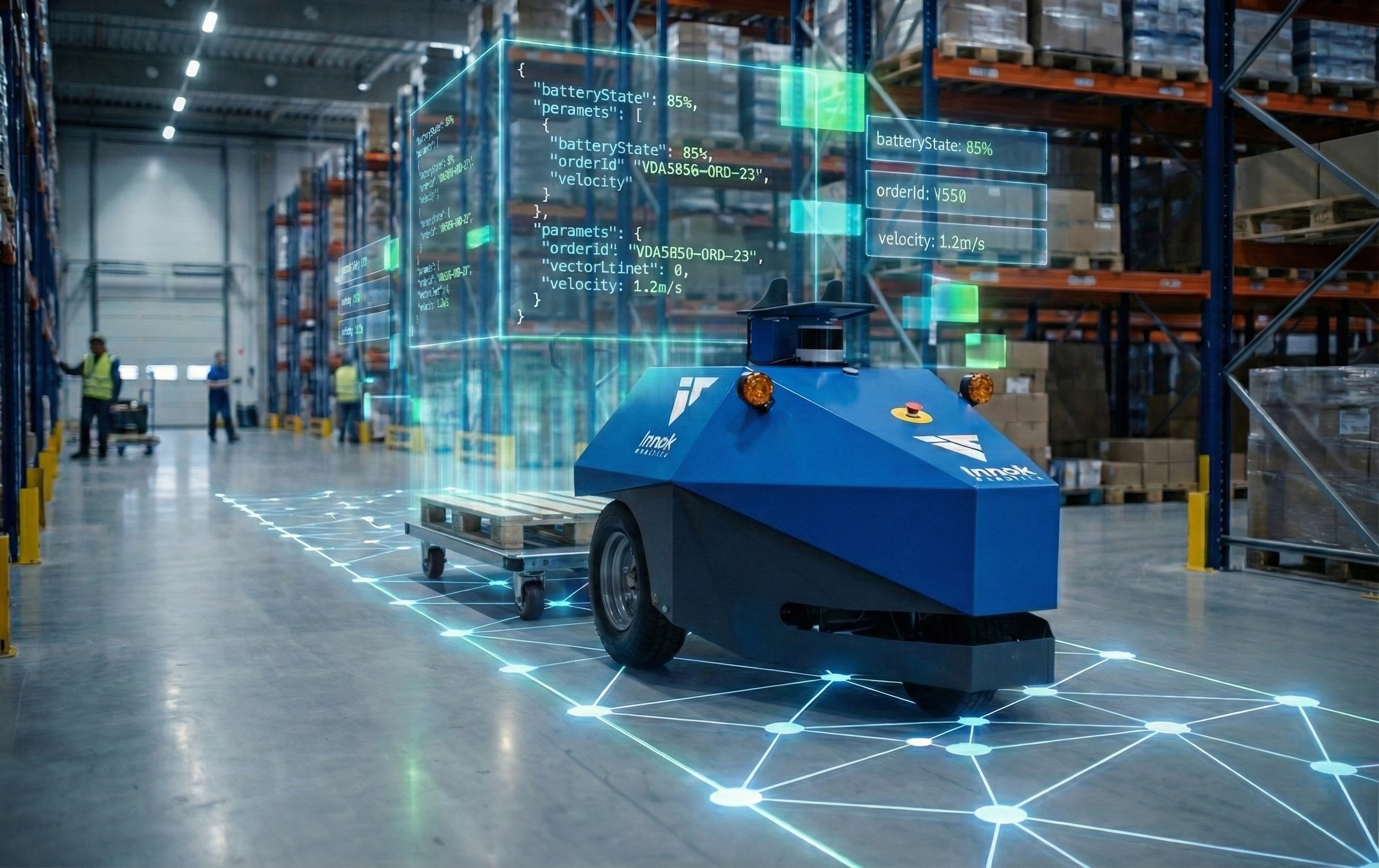
Anyone who wants to introduce mobile robots or driverless transport systems in their company today is faced with a key question: how can vehicles from different manufacturers be operated together and efficiently without having to program an individual interface each time?
This is exactly where VDA 5050 comes in. The standard defines a uniform, manufacturer-independent communication interface between automated vehicles (AGVs, AMRs, AGVs) and a central control system. VDA 5050 was developed by the German Association of the Automotive Industry (VDA) and the German Engineering Federation (VDMA), supported by the Institute for Material Flow and Logistics (IFL) at KIT and numerous industry partners.
In this article, you will find out exactly what VDA 5050 is, how the standard works technically, what opportunities it offers for operators and where its limitations lie. You will also get a practice-oriented classification of when VDA 5050 is really worthwhile and what an introduction to standardized fleet management typically looks like.
VDA 5050 is a standardized communication interface between automated transport vehicles and a central control system. Essentially, the standard regulates how:
Important key points:
The current official version is VDA 5050 version 2.1.0. It was published by VDA and VDMA in January 2025 and extends earlier versions with additional functions and clarifications, including for the integration of heterogeneous, larger fleets.
Before VDA 5050, AGV and AMR fleets in many plants were heavily manufacturer-dependent. Typical situation:
The objectives of VDA 5050 can be summarized in a few points:
Various mobile robots and AGVs should be able to run in a common, higher-level control system.
Operators should be able to combine vehicles from different manufacturers without having to develop a separate interface for each vehicle.
New vehicles should be able to dock onto an existing control system with reasonable effort.
Even large fleets with many vehicle types should be able to be managed centrally.
The standard was created in close cooperation between users (primarily the automotive industry) and manufacturers, including tests in real factory environments, such as AGV mesh-ups.
Technically, VDA 5050 is a protocol that is implemented with JSON data objects and, in practice, typically via MQTT.
Architecture: master control, broker, vehicle
In simplified terms, the system consists of three central components:
VDA 5050 defines which information is exchanged in which structure between master control and vehicle and in which MQTT topics it is to be transported.
Core objects: Order, state and instant actions
Central message types in the VDA 5050 protocol include
The data is transmitted in a defined JSON structure. Quality of service levels and topics use MQTT to control how often and with what reliability information is exchanged.
Distribution of roles: Who plans the route?
A frequent question concerns the division of tasks between the control system and the vehicle:
With autonomous mobile robots in particular, the transition is fluid: while the guidance system specifies target nodes and framework conditions, the robot calculates the specific trajectory locally and reacts independently to obstacles. VDA 5050 does not specify how to navigate internally, only how both sides communicate.
It is also important to understand what VDA 5050 does not do. The standard is deliberately focused and does not define a complete system architecture.
The points that are not regulated by VDA 5050 include, among others
For operators, this means that VDA 5050 is an important piece of the puzzle, but not a complete replacement for safety concepts, network design or individual layout planning.
Despite its clear focus, the standard offers a number of specific benefits for users in production and logistics.
The most obvious advantage is the ability to operate vehicles from different manufacturers in a shared control system. This opens up:
Instead of implementing a separate interface for each new vehicle, a protocol that has been implemented once is used several times. This can have positive effects for
As VDA 5050 is being further developed in an open working group with the participation of VDA, VDMA and numerous industry partners, operators benefit from:
If VDA 5050 capability is clearly required, it is easier to compare offers from different manufacturers. The focus shifts more towards:
The standardized data structures of VDA 5050 can also be used in simulation tools, test environments or digital twin scenarios. This allows operators to run through fleet behavior or layout variants in advance.
Although the standard originated in the automotive industry, it is now used in the wider intralogistics sector.
Examples:
At a VWN plant, a large, cross-manufacturer fleet of mobile robots is orchestrated by a fleet manager from a major German provider. The vehicles from different manufacturers communicate with the central control system via VDA 5050.
All fleet manager providers report an extensive partner network in which mobile robots from different providers are integrated into their platform via VDA 5050. Innok Robotics is also a partner of numerous systems with its solutions.
These and other projects show that VDA 5050 is already being used in practice to manage large and mixed fleets and is not just a theoretical concept.
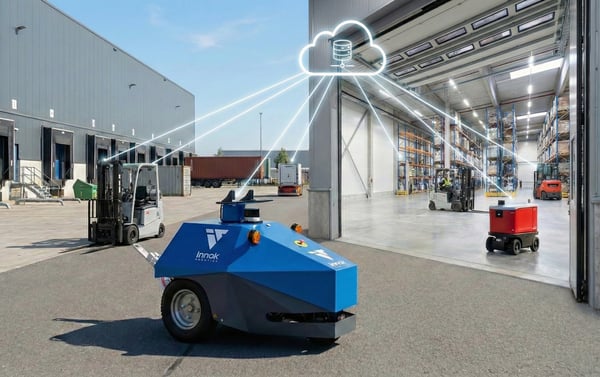
VDA 5050 was originally developed with a focus on classic driverless transport systems, but is now clearly aimed at broader use in mobile robotics.
Key points:
Classic, track-bound AGVs use VDA 5050 as a standardized connection to the master control system. The routes are often permanently defined and the standard transports orders and status.
Freely navigating robots have their own local intelligence. VDA 5050 forms the bridge between global order coordination and local navigation. The robot decides for itself how to implement the task specified by the master control in the environment.
In many plants, robots will coexist in the future:
VDA 5050 primarily addresses the communication between master control and the automated units and thus facilitates the step-by-step development of such mixed fleets.
Especially in complex plant structures with indoor and outdoor transport, several halls and changing requirements, a standardized communication layer can be an important element in managing growth and change.
Companies that want to use VDA 5050 should approach the topic in a structured manner. In practice, a step-by-step approach has proven successful, as the effort involved should not be underestimated under any circumstances:
Ideally, companies should accompany these steps with a systematic material flow analysis. This ensures that not only the interface, but the entire material flow is optimized for efficiency and stability.
Is VDA 5050 required by law?
No. VDA 5050 is a recommendation or an industry standard, not a legal standard. No operator is obliged to use the standard. In many projects, however, VDA 5050 capability is increasingly mentioned as a criterion in tenders, especially in the automotive industry.
Will VDA 5050 replace all proprietary interfaces?
No. Numerous manufacturers will continue to offer additional, sometimes deeper integration options via their own APIs. VDA 5050 covers the common denominator that is necessary for interoperable fleet operation. Specific functions, diagnostic options or special functions will often continue to be implemented via manufacturer-specific interfaces.
Does VDA 5050 cover safety issues?
Only to a very limited extent. The standard does not regulate functional safety in terms of performance level, SIL or comparable requirements. Safety concepts remain the responsibility of the manufacturers and operators and are determined by other standards and guidelines.
Can I retrofit existing vehicles to VDA 5050?
That depends on the architecture of the vehicle in question. In some cases, retrofitting is possible via gateways or software updates, in other cases this would only be possible with considerable effort. Many suppliers are currently working on gradually making their vehicles and control systems VDA 5050-compatible.
Does VDA 5050 also work outside the automotive industry?
Yes, although the standard arose from the requirements of automotive production, the interface can generally be used for internal material transports, for example in mechanical engineering, logistics, trade or the process industry.
VDA 5050 is not a panacea, but it is a central building block on the way to manufacturer-independent, scalable mobile robotics in intralogistics. The standard creates:
For operators, a closer look is particularly worthwhile if:
Those who consider these points early on and consistently embed VDA 5050 in their automation strategy will create the basis for intralogistics in which classic AGVs, modern AMRs and future generations of robots can work together efficiently. Our experts at Innok Robotics can also advise you on the decision as to whether it is better to introduce VDA 5050 right from the start when implementing an autonomous transport robot or whether a quick ROI and rapid implementation with the manufacturer's software would be more expedient.
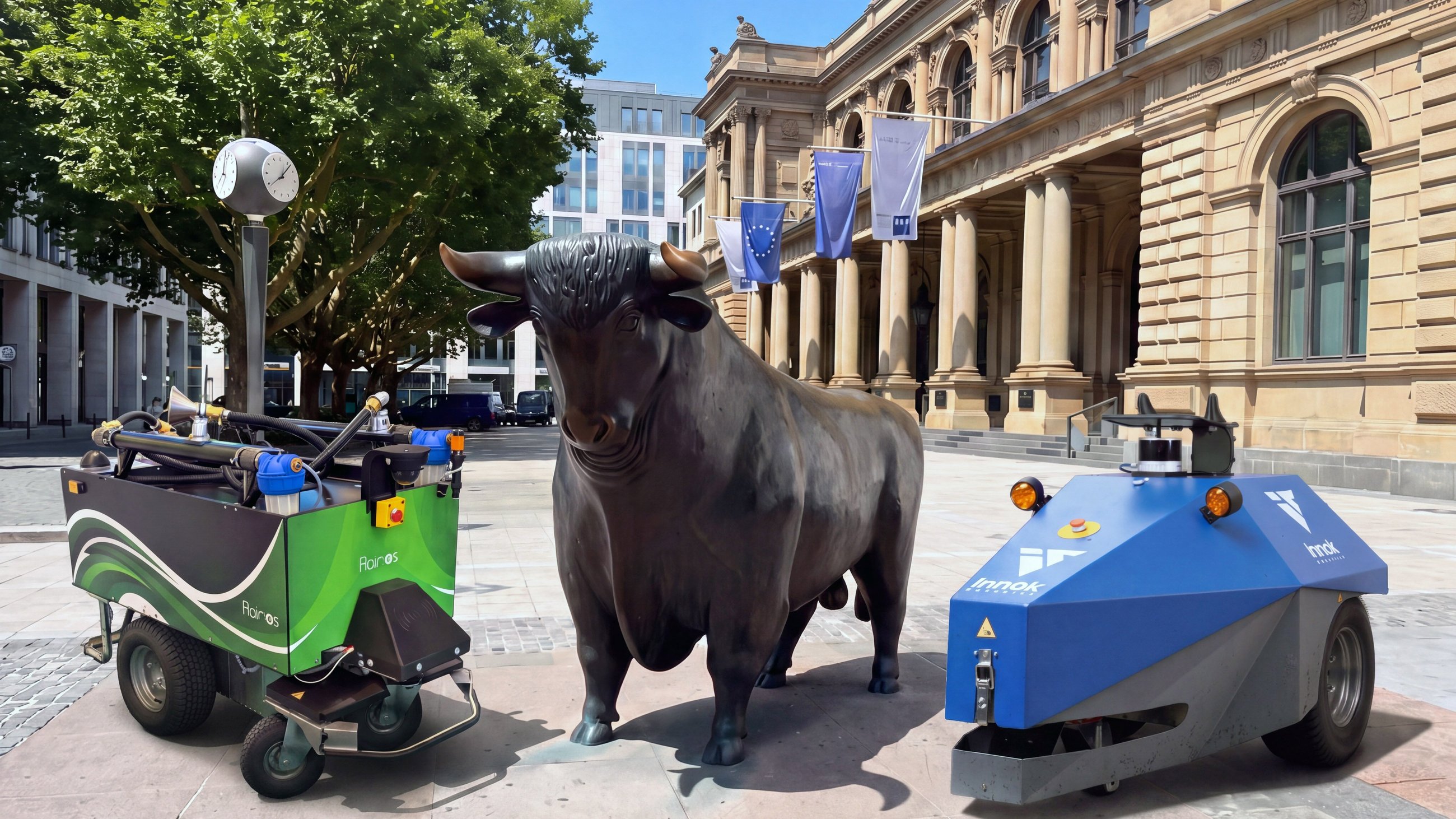
Annual General Meeting Approves Contribution: Innok Robotics on Course for the Public Capital Market
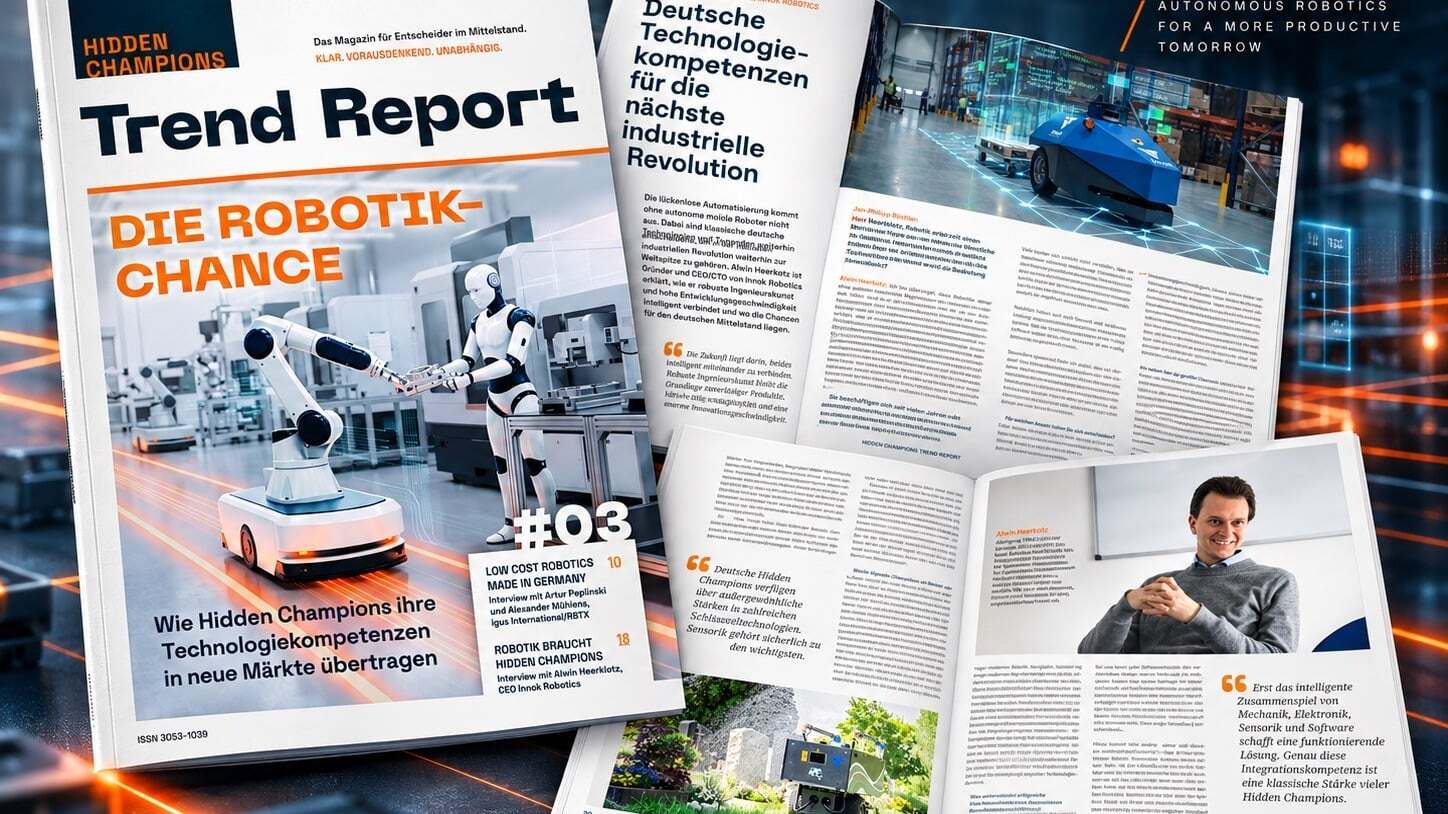
Innok Robotics in the New Hidden Champions Trend Report: A Pioneer in the Key Area of Robotics.
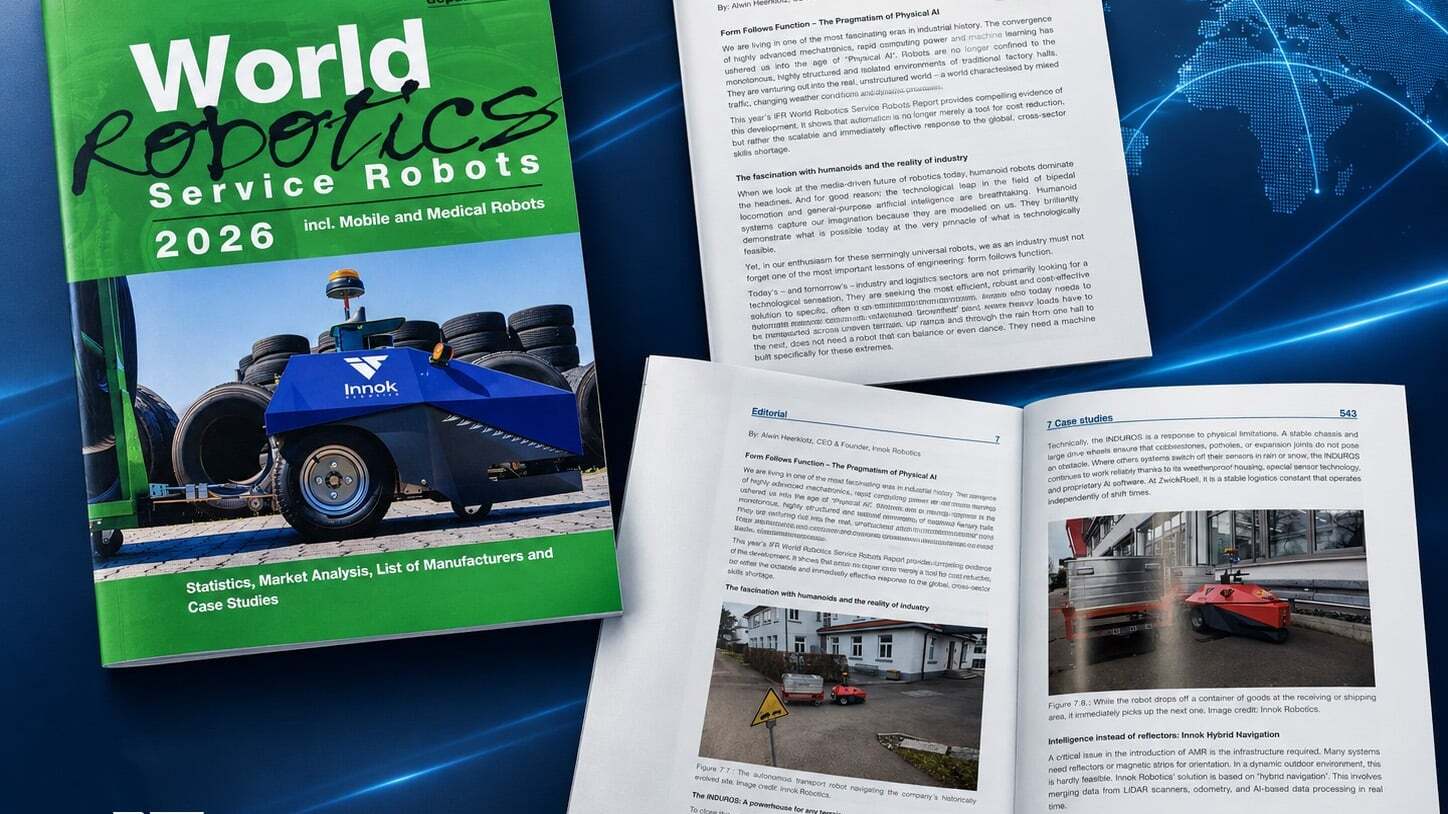
The International Federation of Robotics (IFR) has published this year’s World Robotics Service Robots Report. We are pleased that Innok Robotics...