 Innok Robotics
Annual General Meeting Approves Contribution: Innok Robotics on Course for the Public Capital Market
Annual General Meeting Approves Contribution: Innok Robotics on Course for the Public Capital Market
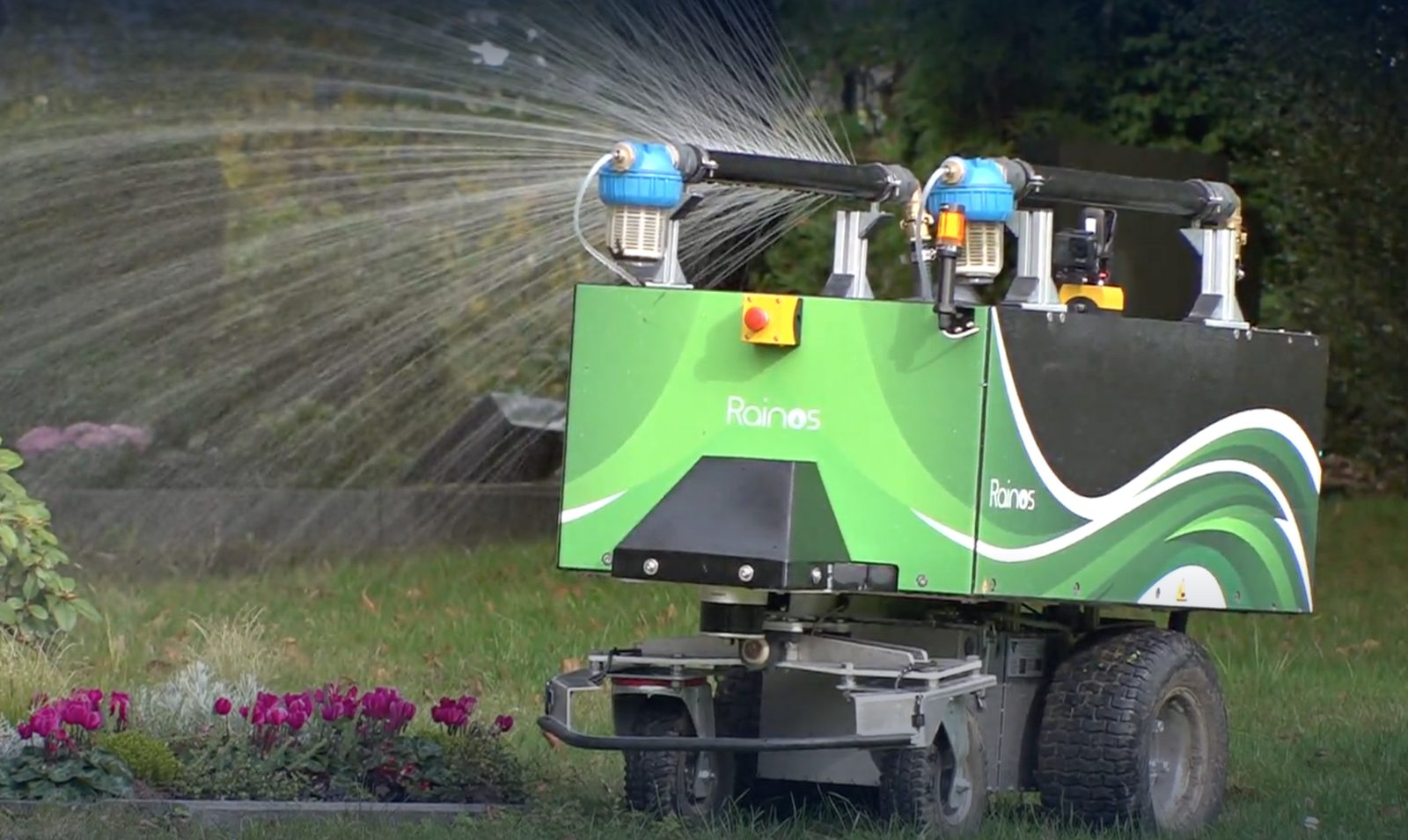
Watering graves is one of the most time-consuming tasks in any cemetery - and the situation is similar in many parks and green spaces. Rising personnel costs, a shortage of skilled workers and longer periods of heat make daily watering a strategic issue. This guide shows which watering methods are available today, what they cost and why an autonomous watering robot is now the economically and ecologically superior solution. You will learn how a modern watering robot works, from what size the investment pays off and where its use makes sense beyond the classic cemetery.
1 What does grave watering mean - and why is it gaining in importance?
2 What methods of grave irrigation are there?
3. How much does grave irrigation cost in comparison?
4. How does a watering robot for grave irrigation work technically?
5 What are the advantages of an autonomous watering robot?
6. Beyond the cemetery: watering robots for parks and green spaces
7 What requirements must be met on site?
8 When is the switch worthwhile - amortization and funding
9 Conclusion: Rethinking grave irrigation
Grave watering refers to the regular, often daily watering of grave plantings in cemeteries during the main season. In contrast to large-scale beds, each grave site requires its own amount of water: alternating plantings with summer flowers, perennials on urn graves or classic care graves differ considerably in terms of water requirements and watering intervals. In addition, cemeteries, as places of silence and reverence, have special requirements in terms of noise emissions, appearance and discretion.
Three developments have fundamentally changed grave watering in recent years. Firstly, climate change is noticeably extending the watering season - where watering used to take place from May to September, the need for watering now often starts as early as April and extends well into October. Secondly, cemetery nurseries and municipal building yards are suffering from an acute shortage of skilled workers: gardeners should concentrate on planting, design and advice, not on simply lugging around watering cans. Thirdly, expectations of documentation and consistent quality are increasing - especially in the case of permanent grave maintenance contracts, clients are demanding proof that every grave site is reliably cared for.
As a result, anyone who wants to organize cemetery irrigation economically today can no longer ignore the issue of automation. An autonomous irrigation robot is no longer a dream of the future, but proven practice. Before we look at the technology, however, it is worth comparing the current methods.
Manual watering is still the most common form of grave care. It is flexible, requires little equipment and is ready for immediate use. The cost is enormous: experience shows that an experienced person needs around one minute per grave, including paths and filling. With 500 graves to look after, this means more than eight hours of pure watering work per person per day. In hot periods, when double shifts are required anyway, this quickly becomes an overload trap.
One step above this are watering carts, which are equipped with water tanks of 200 to 1,000 liters and are mounted on small tractors or trailers. They shorten the distances between the water connection and the watering point and reduce the amount of towing. However, they do not replace a person: someone has to guide the hose, drive to each grave, dose the amount of water and fill the trolley. A watering trolley is therefore an efficiency aid, not automation.
Drip hose or pop-up sprinkler systems with underground pipes are standard in private gardens and sports facilities. In cemeteries, they fail for three reasons: Firstly, not every grave can be treated in the same way - alternating plantings need different water to perennials. Secondly, hoses in the ground collide with burials, excavation and planting work. Thirdly, laying them over thousands of square meters is structurally complex and expensive. Real individual irrigation for each grave is practically impossible with stationary systems.
The latest and most consistent development is the autonomous watering robot for grave irrigation. This type of watering robot drives autonomously across the cemetery, recognizes each grave site and dispenses a predefined amount of water with the appropriate watering pattern - without any intervention in the ground, without any visible infrastructure and without anyone having to guide the hose. The robot prefers to work at night, when there are no mourners present and evaporation is low.
The most honest answer is: the most expensive option is usually manual watering. Personnel costs of 35 to 50 euros per hour, including non-wage labor costs, quickly add up to five-figure sums over a six- to seven-month watering season. A nursery with 500 care graves, which have to be watered daily, easily invests 40,000 to 60,000 euros per season in watering alone - tied up staff hours that would be urgently needed for planting, floristry and advice.
A watering trolley reduces this expenditure by an estimated 20 to 30 percent, as routes and filling processes become more efficient. Depending on the tank size and carrier vehicle, the investment is between 8,000 and 25,000 euros (sometimes significantly more), plus annual maintenance, energy and insurance costs. Stationary irrigation systems are often cheaper to purchase per square meter but, as described above, are hardly practical to implement in cemeteries.
An autonomous grave irrigation watering robot is priced above the sums mentioned, depending on the expansion stage and number of watering points. This investment does not replace the gardening staff, but the watering work - i.e. the least attractive routine hours. Practical examples show that an irrigation robot pays for itself economically from around 200 graves to be watered and often amortizes the acquisition costs within two years. Leasing models with monthly installments are also widespread.
A modern watering robot such as the RAINOS works on the basis of a high-precision 3D map of the cemetery. This map is created once using a terrestrial laser scanner and contains every path, every intersection and every watering point. You can think of this map as an ultra-precise Google map. On this basis, the irrigation robot navigates without GPS - this is crucial because GPS signals can be unreliable between tall trees and cemetery walls. Instead, the robot orients itself using a 3D LiDAR scanner with different height levels and a field of view of around 270 degrees.
Obstacles - mourners, tools, free-roaming animals - are reliably detected; the robot stops automatically. A tactile bumper strip at the front and rear as well as emergency stop switches complete the safety concept. Devices currently on the market meet European safety standards, including CE certification; corresponding safety certificates are available and are expressly appreciated by cemetery administrations.
The actual watering process takes place individually for each grave. The amount of water, watering duration and watering pattern (e.g. for shell, urn or row graves) can be stored for each grave. Optional watering fittings on the robot enable different spray patterns without changing tools. A graphical user interface shows in real time which graves have already been watered. If the tank is empty, the robot drives itself to a solar-powered refueling station, refuels itself in under a minute and continues its mission. It then returns to the charging station, which is operated by cable or inductively. A powerful irrigation robot can manage up to 14 hours of autonomous operation and up to 20,000 liters of irrigation water per night.
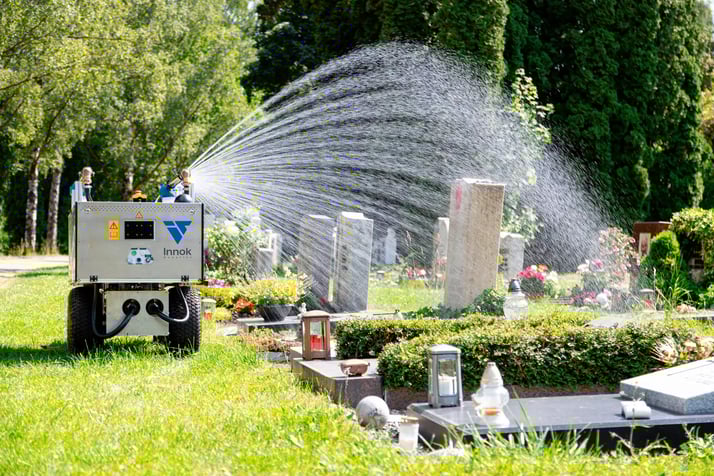
Cemetery gardeners report that the daily watering round shrinks from two and a half days to half a day as soon as an autonomous watering robot is in use. The time freed up flows into advice, planting and floristry - in other words, into added value instead of routine. Although this does not solve the shortage of skilled workers, it does significantly alleviate it.
A watering robot distributes exactly the defined amount of water per watering point. Studies and practical experience show water savings of around 20 percent - partly due to precise dosing and partly because night-time watering significantly reduces evaporation. The robot thus makes a measurable contribution to climate adaptation in cemeteries and green spaces.
An all-electric, low-noise machine that works at night without public traffic is much better suited to the reverence of a cemetery than a tractor with a combustion engine in the morning. There are no disturbing machines, hoses or noises during funerals or memorial services - an argument that should not be underestimated when dealing with the cemetery administration and parish.
With an irrigation robot, new sources of revenue can be opened up without hiring additional staff: Vacation watering of external graves, seasonal watering, looking after communal greenery on the cemetery grounds or smart city jobs in the surrounding area. In this way, cemetery nurseries are transformed from pure maintenance operations into service providers with attractive additional business.
Up to 14 hours of autonomous operation per night, plus complete logging of every watering point: this provides clients - such as cemetery administrations or private customers with permanent grave care - with reliable proof that every grave site has been reliably cared for.
Even though most watering robots are used in cemeteries today, their application potential is by no means limited to this area. Wherever a large number of individual planting points need to be watered regularly and there are no permanently laid irrigation hoses in the ground, an autonomous watering robot is an elegant, flexible alternative.
In urban parks and green spaces, there are countless planters, alternating flower beds at entrances and newly planted trees whose water requirements are crucial for growth in the first few years. A watering robot can control these points according to a stored schedule without municipal employees having to work double shifts in midsummer. This makes green space irrigation plannable and sustainable.
Botanical gardens and monasteries benefit in particular from resource-saving, documented irrigation. Horticultural businesses and tree nurseries with large areas without a drip hose infrastructure can use the robot to water young plants at night. Even outdoor areas of large hotels, memorials or extensive company parks can be covered - as long as the paths have a minimum width of around 80 centimetres and gradients remain below ten percent.
The decisive advantage over stationary irrigation systems is the flexibility: if the planting changes or new watering points are added, the digital map is simply adjusted - no need to lay a new hose or dig up a bed. If you are planning new green spaces anyway, you should think about their maintenance right from the start.
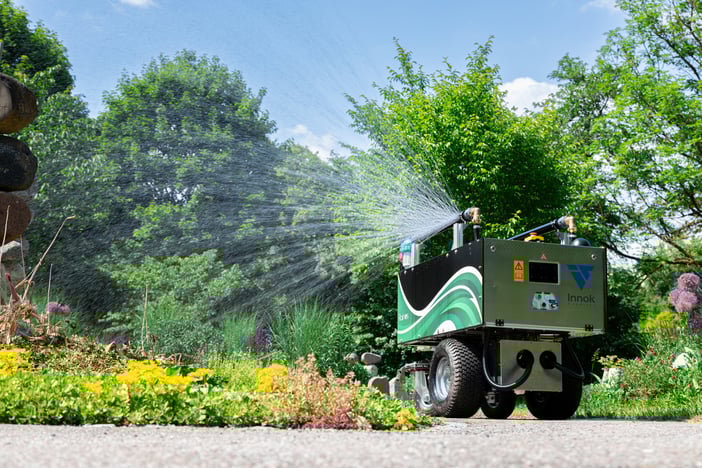
In order for a watering robot to develop its full potential, a number of infrastructural points need to be checked:
Official approval is usually granted informally by the cemetery or church administration. So far, there have hardly been any rejected applications in the DACH region because the advantages for the quality of care, water consumption and environmental balance for cities and municipalities are obvious.
Three factors determine whether a grave irrigation watering robot is economically viable. Firstly, the number of watering points: From around 200 graves or planting points to be watered regularly, an irrigation robot becomes economical. With 500 to 1,400 points - as is the case in many medium-sized cemeteries - it develops its full potential. In many cases, a second robot makes sense. Secondly, the personnel situation: anyone who has difficulty finding qualified seasonal staff for watering work or wants to protect permanent staff from summer overload benefits immediately. Practical reports regularly state that "employees are deployed elsewhere because they no longer have to do the watering work". Thirdly, the infrastructure, as described in the previous section.
Several financial options are available: traditional purchase, leasing over 48 months (full amortization, monthly installments) or gradual expansion via step-by-step models in which the robot "grows" with the number of graves to be watered. Subsidies from digitalization and smart city programmes are available depending on the federal state and municipality - a forward-looking application often reduces the effective costs.
If you want to calculate, you typically proceed as follows: determine the current annual personnel costs of the watering work, estimate a realistic saving of 60 to 80 percent of this, and evaluate the water savings and reduced specialist hours. This amount is compared with the annual costs of the robot (depreciation, maintenance, electricity, water). As a rule, it can be seen that the robot works economically from year one and is fully amortized from year two to three.
Grave watering is caught between tradition and transformation. Manual watering with a can or hose will retain its place in the years to come - for individual care, smaller stands and particularly sensitive plantings. However, if you want to water hundreds or thousands of watering points reliably, resource-efficiently and predictably, you can hardly avoid a grave watering robot. Climate change, a shortage of skilled workers and increasing quality requirements are driving this development at a rapid pace.
An autonomous irrigation robot such as the RAINOS from Innok Robotics combines today's key features: high-precision 3D navigation without GPS, grave-specific irrigation with up to 20,000 liters per night, autonomous refueling and charging, the highest safety standards with CE certification and field testing at dozens of locations from Hamburg to Stuttgart to Bern. Several hundred thousand documented operating hours in the Innok fleet and experience since 2019 show that the technology is ready - not only for cemetery nurseries, but also for municipalities, park operators and private green space caretakers.
If you would like to check whether a grave irrigation watering robot is worthwhile for your facility, it is worth having an initial consultation with an individual ROI analysis. The number of watering points and the current personnel costs can often be used to estimate when the changeover makes economic sense - and how quickly irrigation can be turned from a burden into a strategic strength for your business.
Annual General Meeting Approves Contribution: Innok Robotics on Course for the Public Capital Market

Innok Robotics in the New Hidden Champions Trend Report: A Pioneer in the Key Area of Robotics.
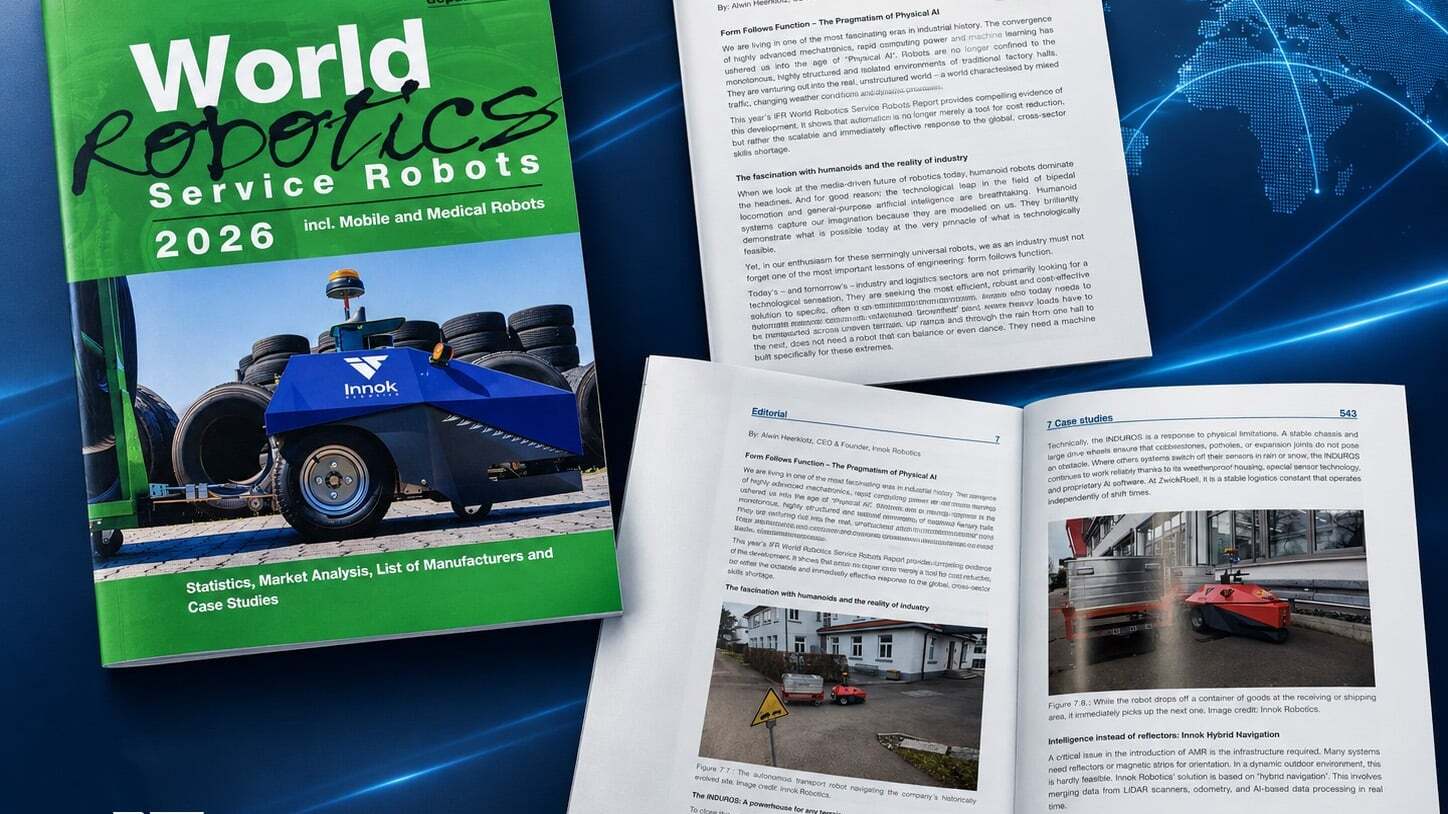
The International Federation of Robotics (IFR) has published this year’s World Robotics Service Robots Report. We are pleased that Innok Robotics...